
Psycho (1960) Essay
Hello! I recently finished another semester of college and wanted to share an essay I wrote about Alfred Hitchcocks Psycho (1960) for a film class! I am also working on a short film with peers from school this summer and am excited to share more details as I am able to. Thank you!
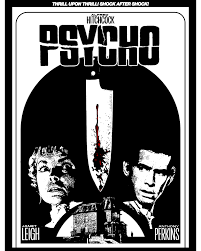
I believe Alfred Hitchcock’s Psycho is Hitchcock’s best film and with full certainty believe its reputation is justified because it not only propelled his career to new heights but also influenced the entire future of the horror genre and the slasher film sub-genre. While the violence in the film does certainly feel tame by today’s standards, this does not diminish the films power and influence even today. Without Psycho, many fan favorite shocking horror films of today might not have been without Psycho’s influence. Psycho was the first film that dared to venture into certain taboo subjects that are normal and common place in the horror genre today but were not at the time such as murder, violence, sex, and mental illness. In my opinion, if this film had not dared to be what it was, horror would not have evolved to become the popular mainstream genre it is today, so its reputation is more than justified and still relevant.
I believe Hitchcock’s application of subjective shots helped elevate the suspense and keep the main elements of the plot on track and in focus. For example, after Marion had stolen the money Hitchcock would often zoom in on the envelope of stolen cash while Bernard Herrmann’s suspenseful score lingered in the background almost as if to say this is consuming Marion’s mind with anxiety and is all she is thinking about now that she has a way to escape her own life or “private trap” as stated in her dialogue with Norman in the motel parlor. This shot could also subjectively mean the opposite that stealing the money put her in a new “private trap.” Hitchcock wanted the audience to be thinking about the stolen money in these shots, but what they were thinking was up to them. Another example of effective subjective camera shots would be when Norman is spying on Marion as it makes the audience speculate what is going through Norman’s mind when he is doing this and making us suspicious of him. This also conveys a POV and the theme of voyeurism which is one of the films main themes that was very taboo for the time. Perhaps the best example of subjective camera shots would be the shower scene, we start off watching Marion bathe and think she has decided to turn things around, wash away the mistakes, and go back tomorrow to return the cash. Just then the camera focuses on a shadowy figure of someone dressed as an old woman who comes in and rips the shower curtain open and then the camera cuts back and forth from the killer stabbing and Marion reacting helplessly. The camera makes the audience feel helpless and stuck there to watch but also makes us subjectively wonder why this is happening and what must be going through Marion’s mind in these final moments. Overall, Hitchcock expertly utilized subjective shots to keep the audience always engaged, even during just simple dialogue scenes.
I believe the three violent and shocking scenes still hold power and effect today because it is not the violence that made these scenes shocking to begin with as there was always little violence shown. What made these scenes so shocking was that they didn’t just happen randomly like in modern horror films, instead there was so much tension and suspense and character development that led to the actual violence that made the scenes effectively more shocking regardless of how little violence was shown. We really came to know some of these characters like Marion and the Detective so when they are killed off it is very impactful while modern horror films kill off characters with little to no character development which diminishes the impact. What made the scene in the fruit cellar so shocking is it revealed the mystery the film was building up to and paid it off with a reveal no one who had read the book or was familiar with the material could have ever saw coming. It established the who-done-it sub genre of slasher films which still are being produced and copied today. While I do understand most younger audiences will find Norman dressed as his mother silly, they must understand and respect how shocking this was upon the films initial release and aside from that how shocking the reveal and twist is still for new time viewers today even despite the cross dressing.
I was very involved in Joseph Stefano’s script and how he brilliantly adapted Robert Bloch’s 1959 novel which was loosely based on American serial killer Ed Gein. His script always kept me asking questions and wanting more information the first time I saw this film as a young boy. Each time you think clues will lead to answers, his script instead leaves you with more questions and keeps you further engaged with it until the ultimate reveal at the end. Hitchcock expertly applied the script and source material while filming and directing the crew and actors. The actors also kept me engaged throughout the film and how they built off each other such as how Norman and Marion are unlikely parallels of each other who are both trying to escape from their own lives and how Lila, Sam, and Arbogast all want to find Marion but for different reasons. Lila wants her sister back, Sam wants his girlfriend back, and Arbogast wants the money back. It was very fascinating to see how all the characters wanted variations of the same thing for different reasons and how the actors playing these characters brilliantly portrayed their characters and their individual motives.
The music by Bernard Herrmann is beyond iconic and in my opinion helped shape the legacy of this film. The violin screeching during the murder and reveal scenes is particularly iconic and like the film itself has been copied in other horror scores or parodied. Going back to what made the three most shocking scenes in the film scary, Bernard Herrmann’s score is another element that made those scenes so scary. The settings and cinematography were also unique and dark and gothic. In my opinion, the black and white helped elevate the gothic nature of the setting and cinematography. The Bates Motel and the house on the hill behind it is one of the most iconic settings in film history and has been recreated for sequels, spin-offs, parodies, and attractions. I would dare say the Bates Motel and house is just as iconic as Dracula’s castle though it is a more subtle villain lair. Overall, Psycho is one of my favorite horror films and favorite films in general and is the reason I love the art of film making and wish to pursue a career in media.